
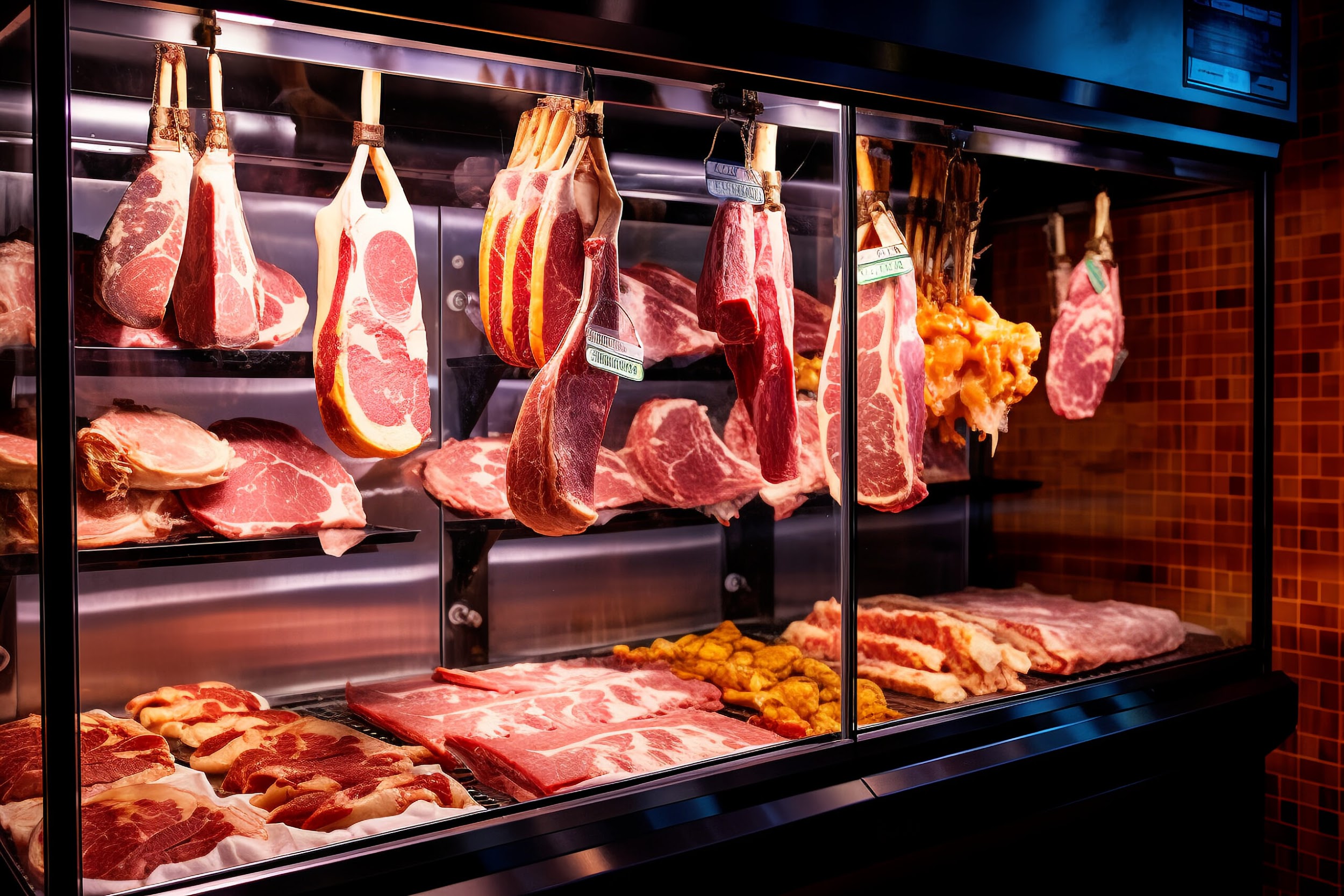
When to rely on ceiling fixtures and when to use dedicated case lighting
Lighting is one of the most critical factors in presenting meat effectively in butcher displays. Proper illumination can make steaks, roasts, pork cuts, and poultry appear fresh, vibrant, and appealing to customers. Butchers and grocery stores must consider the balance between overhead ceiling fixtures and dedicated in-case lighting to achieve optimal product presentation while preserving freshness and minimizing waste.
Promolux LED lighting provides low-heat, UV-free, high-CPI solutions that enhance meat displays, whether using overhead or in-case lighting.
Understanding the Role of Overhead Lighting
Overhead lighting typically refers to ceiling-mounted fixtures that illuminate the entire store or specific sections. Its benefits and limitations include:
- General Illumination – Provides consistent light across the meat department, ensuring all cases are visible
- Shadow Reduction – Helps prevent dark spots caused by shelves, display cases, or fixtures
- Limitations – Standard ceiling lights may not render colors accurately or highlight specific cuts; can be too far from products to emphasize detail
Benefits of In-Case (Dedicated) Lighting
In-case lighting refers to fixtures installed inside or directly above meat display cases. Its advantages include:
- Enhanced Color Accuracy – High-CPI LEDs ensure steaks, pork, and poultry appear true-to-life
- Focused Illumination – Highlights premium cuts or specialty items, drawing customer attention
- Reduced Heat Exposure – Low-heat, UV-free LEDs prevent surface drying and discoloration
- Layered Effect – Combined with overhead lights, in-case LEDs provide depth and visual interest
When to Rely on Overhead Lighting
Overhead lighting is most effective when:
- Providing General Visibility – Ensures the department is well-lit and navigable
- Supplementing Natural Light – Complements daylight from windows without creating glare
- Highlighting Large Areas – Useful for open layouts or long meat counters
Consider using energy-efficient, low-heat LEDs for overhead fixtures to avoid unnecessary warming of meat displays while maintaining brightness.
When to Rely on Overhead Lighting
Overhead lighting is most effective when:
- Providing General Visibility – Ensures the department is well-lit and navigable
- Supplementing Natural Light – Complements daylight from windows without creating glare
- Highlighting Large Areas – Useful for open layouts or long meat counters
Consider using energy-efficient, low-heat LEDs for overhead fixtures to avoid unnecessary warming of meat displays while maintaining brightness.
When to Use In-Case Lighting
In-case lighting is essential when:
- Emphasizing Premium or Featured Cuts – Direct illumination makes marbling, texture, and color more appealing
- Preventing Color Shifts – Ensures pork, poultry, and beef retain natural appearance under varying ambient light
- Creating Layered Displays – Combines accent, under-shelf, and directional lighting to enhance product depth and contrast
Best Practices for Combining Overhead and In-Case Lighting
- Layered Lighting Approach
- Overhead LEDs provide general illumination
- In-case LEDs focus on individual cuts or premium items
- Consider Fixture Placement
- Overhead lights mounted high prevent shadows but should avoid glare on glass surfaces
- In-case LEDs positioned above or under shelves enhance color and texture without heat exposure
- Adjust Color Temperature by Product Type
- Beef: red-enhancing or balanced spectrum
- Pork: slightly warm or neutral
- Poultry: neutral spectrum for pale colors
- Use Diffused or Frosted Fixtures
- Reduces hot spots and glare
- Ensures uniform appearance across all cuts
- Test Lighting at Different Times of Day
Natural daylight may alter perception; adjust fixture intensity or angle as needed
Product-Specific Considerations
- Beef
- Benefit from red-enhancing LEDs in case lighting
- Overhead LEDs provide general visibility but may not fully highlight marbling
- Pork
- Slightly warm or neutral LEDs in cases preserve pink tones
- Overhead lighting ensures even illumination for bulk displays
- Poultry
- Neutral LEDs maintain natural pale color
- Avoid high-intensity overhead lights that can wash out chicken or turkey
Advantages of Proper Lighting Strategy
- Enhanced Product Appeal – Meat looks fresh, vibrant, and inviting
- Increased Sales – Customers respond positively to visually attractive displays
- Reduced Waste – Low-heat, UV-free LEDs protect moisture and prevent fading
- Consistent Appearance – Layered lighting ensures all cuts maintain uniform color and texture
- Energy Efficiency – Properly placed LEDs reduce unnecessary energy usage
Practical Tips for Butcher Shops
- Implement low-heat, high-CPI LEDs for both overhead and in-case lighting
- Use diffused or frosted fixtures to avoid glare and hot spots
- Adjust angles to highlight premium cuts without overexposing others
- Combine general overhead lighting with accent in-case LEDs for layered illumination
- Regularly clean fixtures and glass surfaces to maintain optimal brightness
Conclusion
Both overhead and in-case lighting are essential for butcher displays, but they serve different purposes. Overhead lighting provides general visibility and reduces shadows, while in-case LEDs enhance color, texture, and freshness perception. Using a layered approach with low-heat, UV-free, high-CPI LEDs ensures beef, pork, and poultry appear vibrant and appealing while minimizing waste. Proper placement, color spectrum selection, and diffused illumination guarantee that all products look their best, increasing customer confidence and driving sales.
Call to Action
For professional LED lighting solutions that combine overhead and in-case illumination for butcher displays, visit: www.butcherlamps.com