
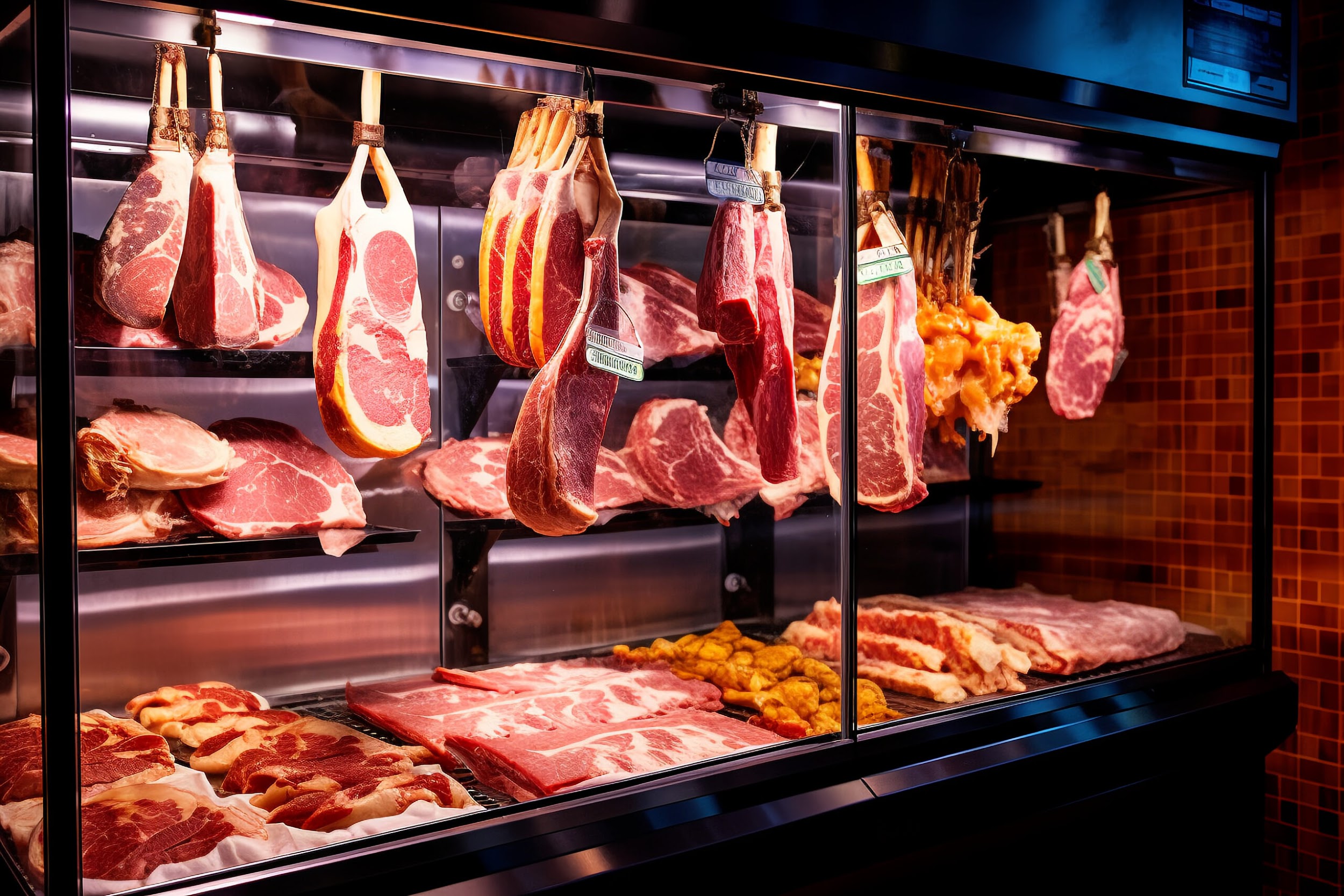
Balancing security, energy use, and product condition when the shop is closed
Why Night-Time Lighting Matters
- Protecting Product Quality
- Continuous light, especially from heat-generating lamps, can dry surfaces and affect color
- UV exposure may cause subtle oxidation in meat, changing appearance and reducing shelf life
- Energy Efficiency
- Keeping full-intensity lighting on overnight is wasteful
- Low-energy night settings preserve visibility while reducing electricity costs
- Security
- Proper illumination deters theft or vandalism
- Balanced lighting provides enough visibility for surveillance cameras without overexposing the store
Night-Time Lighting Strategies
- Reduce Intensity
- Dim LED lighting to the minimum needed to keep cases visible
- Low-intensity illumination is sufficient for monitoring without generating unnecessary heat
- Use Timers and Sensors
- Program lights to automatically switch to night mode after closing hours
- Motion sensors can activate security lighting only when needed
- Maintain Uniform Illumination
- Avoid hotspots or dark areas that may affect product appearance or attract attention for theft
- Even, low-level lighting protects meat from unnecessary exposure to heat or UV
Benefits of Promolux LEDs for Night-Time Settings
- Low Heat Output: Unlike halogen or incandescent lamps, Promolux LEDs minimize drying or discoloration of meat surfaces
- UV-Free Technology: Protects red beef, pink pork, and poultry from oxidation during overnight illumination
- Energy Savings: Promolux LEDs consume a fraction of the electricity of traditional lamps, reducing operating costs
- Long Lifespan: Durable LEDs require fewer replacements, even when used in night-time mode
Long-tail keywords naturally added: low-heat LED lighting for overnight meat displays, Promolux night-time butcher display solution, energy-efficient night lighting for meat counters
Implementing Effective Night-Time Settings
- Assess Display Cases
- Identify all cases requiring night-time illumination
- Note which products are stored in ambient vs refrigerated environments
- Set Night Mode
- Dim all display lighting to low intensity
- Ensure chilled cases maintain consistent temperature while being gently illuminated
- Monitor Product Condition
- Check color, moisture, and surface texture of meat daily
- Adjust night-time lighting intensity if signs of drying or discoloration appear
- Combine with Security Measures
- Supplement with external motion-activated lights or security cameras for overall protection
- Avoid full-case bright lighting that increases energy use and heat exposure
Practical Examples
- Premium Beef Display: Dim red-enhancing LEDs to maintain marbling visibility without overexposure
- Poultry and Pork Sections: Use neutral low-intensity LED night mode to preserve natural color
- Mixed Meat Counters: Program timers to gradually reduce intensity after closing, balancing energy use and product care
Additional Considerations
- Energy Audits: Track electricity consumption during night-time lighting to ensure savings
- Staff Training: Educate employees on night-mode settings and monitoring
- Maintenance: Keep fixtures clean to maintain even, low-level illumination
Conclusion
Night-time lighting in meat departments is more than just keeping the store visible.it’s about protecting product quality, saving energy, and ensuring security. Low-heat, UV-free, high-CPI LED solutions like Promolux allow retailers to maintain optimal meat appearance overnight while reducing operational costs. Implementing timers, dimmers, and strategic placement ensures that both premium and value cuts remain fresh, vibrant, and safe for the next business day, while energy consumption and unnecessary heat are minimized.
Call to Action
For professional LED solutions that optimize night-time lighting in meat departments and protect product quality, visit: www.butcherlamps.com